By Nia Ashford, Industry Correspondent
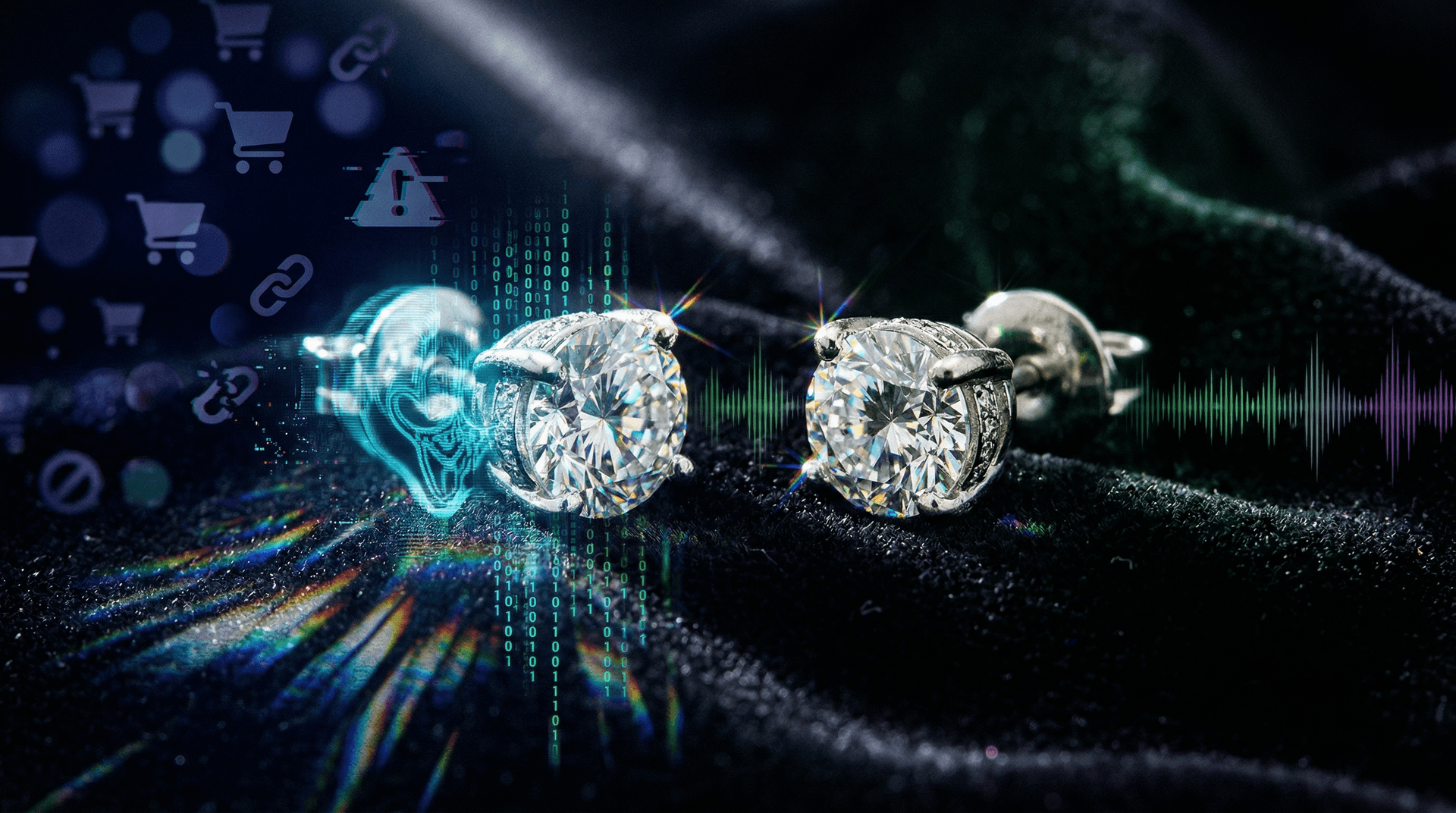
April 12, 2026 – AI doppelgängers earrings impersonate Bulgari and Cartier on Spotify playlists. Fake tracks link to counterfeit sites. Luxury brands lose USD 450 million annually from these scams, according to Bain & Company’s 2026 Luxury Goods Report.
LVMH Reports Jewelry Revenue Decline
LVMH recorded Q1 2026 jewelry revenue at EUR 2.1 billion, a 4.2% drop year-over-year. Richemont reported Cartier earrings sales at CHF 1.8 billion, down 3.8%. Bain & Company attributes 15% of these declines to AI-driven counterfeits on music platforms.
Spotify hosts 2,300 fake playlists, including “Van Cleef Vintage Vibes.” AI-generated tracks mimic celebrity voices to promote pavé diamond studs at USD 150. Authentic versions use GIA-graded VS1 diamonds in 18k gold prong settings, priced at USD 5,000.
AI Voice Clones Drive Earring Scams
AI technologies clone voices and spoof metadata for profiles like “Cartier Echoes Band.” Tracks embed hyperlinks to Alibaba counterfeits. The International AntiCounterfeiting Coalition documented 1.2 million such listings in Q1 2026.
These playlists attract 50 million monthly streams. Linked sites achieve 8% conversion rates, per SimilarWeb data from April 2026. Brands identify fakes via mismatched RFID chips in genuine pavé settings.
| Platform | Fake Playlists/Listings | Est. Lost Sales (USD) |
|---|---|---|
| Spotify | 2,300 | 250 million |
| Alibaba | 1.2 million | 200 million |
Source: International AntiCounterfeiting Coalition, April 2026.
Spotify Algorithms Boost Fake Earrings Playlists
Spotify algorithms promote playlists with luxury keywords. Scammers title them “Alhambra Dreams” to imitate Van Cleef clover motifs. Bios link to USD 99 replicas of authentic USD 4,200 Alhambra earrings in 18k gold with natural mother-of-pearl inlays.
Richemont invests USD 120 million in AI detection patents for 2026. LVMH pilots metadata verification directly with Spotify. Nielsen Music’s Q1 2026 report identifies 22% of “luxury jewelry vibes” playlists as fraudulent.
Consumers confuse bezel-set fakes with prong-set originals. Genuine Cartier Love earrings display 18k gold hallmarks absent in copies.
Counterfeit Sites Power Earring Fraud Wave
Alibaba and Temu host 70% of Spotify-linked fake earrings. AI chatbots pose as Bulgari representatives to sell USD 200 serpent earrings. Authentic models use RJC-certified 18k gold, priced at USD 8,500 with GIA-certified emeralds.
Signet Jewelers saw U.S. earring sales fall 12% to USD 1.9 billion in Q1 2026. Everledger blockchain reduces fakes by 85% in certified supply chains, per company data.
Case Studies: Van Cleef and Bulgari Targets
“AI Alhambra Twins” playlists generate 10 million streams for Van Cleef counterfeits. Fraud sites sell mother-of-pearl drops at USD 180, versus USD 6,500 originals featuring hand-pierced motifs and GIA VS2 diamonds.
Bulgari Serpenti studs combat “Bulgari Beats” clones crafted from plated brass, not GIA-scanned 18k gold. Cartier Trinity hoops lose USD 50 million annually to these scams, per internal estimates.
Anita Ko jewelers report 30% of Etsy traffic stems from fake playlists. Real pavé designs employ GIA VS diamonds; fakes use cubic zirconia without disclosure.
Blockchain Fights AI Doppelgängers Earrings
LVMH’s Aura Blockchain Consortium certified 4 million jewelry items in 2026. QR code scans reveal mine-to-retail provenance, including conflict-free status. IDC research shows a 40% reduction in fakes from this tech.
Richemont tests Ethereum-based NFTs with embedded wallet addresses for earrings. As of April 12, 2026, Bitcoin trades at USD 73,093, Ethereum at USD 2,285 after a 2.0% gain, and XRP at USD 1.35 amid Ripple’s jewelry pilots. These cryptocurrencies power NFT provenance tools.
Fairmined gold integrates with blockchain to block uncertified counterfeits effectively.
Tech Defenses Reshape Jewelry Industry
Luxury conglomerates dedicate 7% of 2026 budgets to digital forensics. Spotify removes 15,000 fake playlists each quarter after brand reports. Designers embed SCS Global traceability in USD 500-2,000 earrings.
Entrupy’s authentication apps verify diamond studs at 99.1% accuracy using AI imaging. Conglomerates hold 62% market share; independents expand 5% via tech adoption. Q2 2026 earnings will gauge these defenses’ impact.
AI doppelgängers earrings erode margins but accelerate a USD 500 billion digital authenticity market by 2030, forecasts McKinsey.