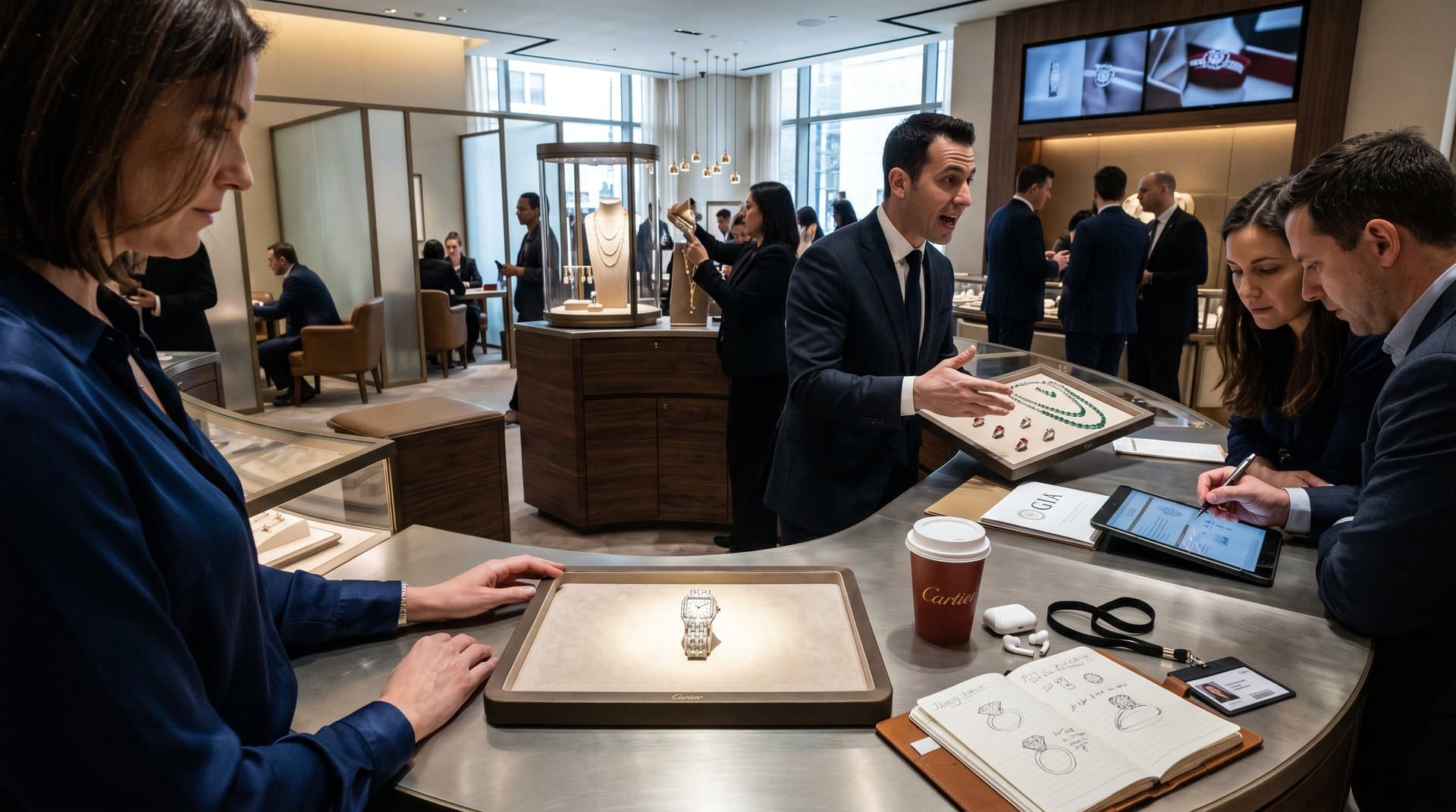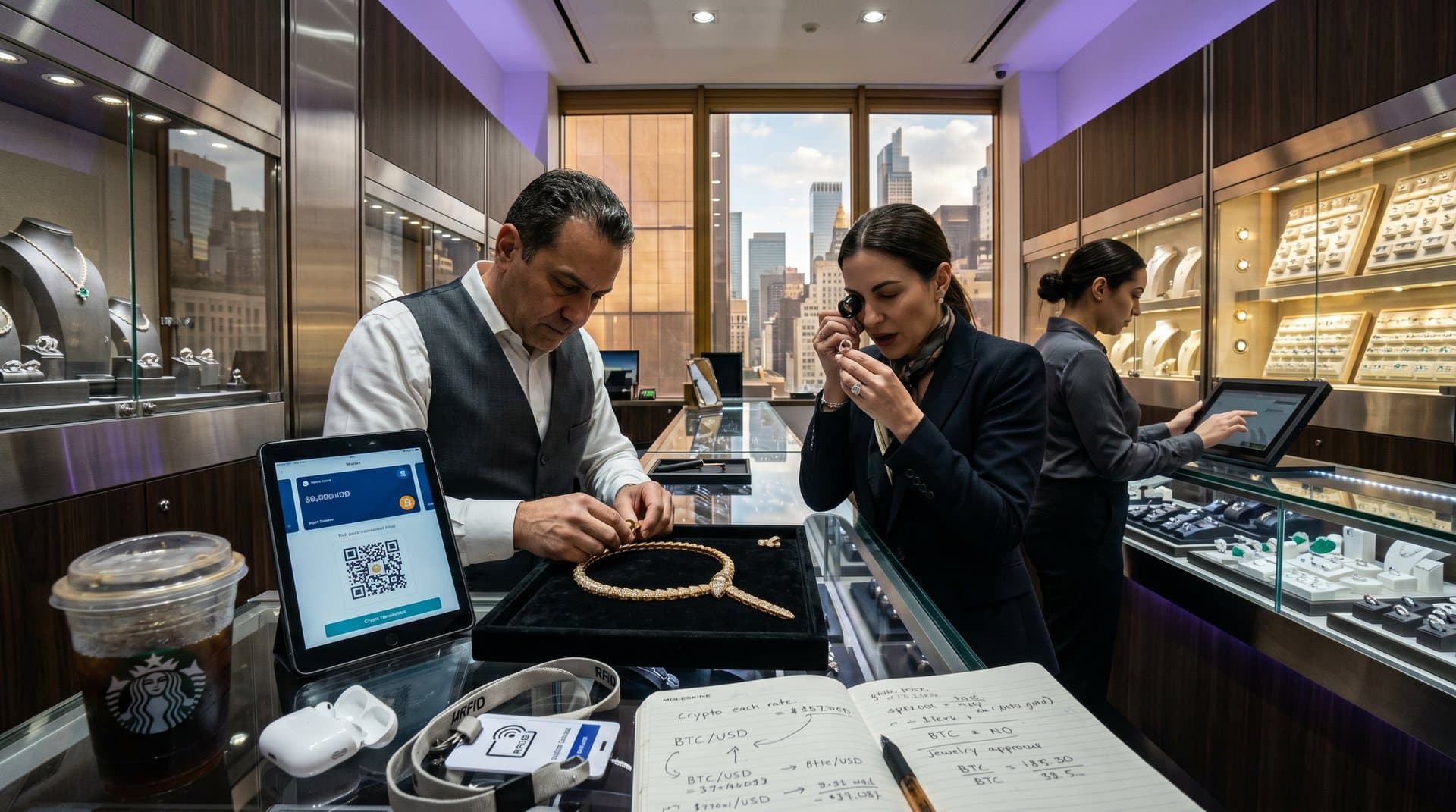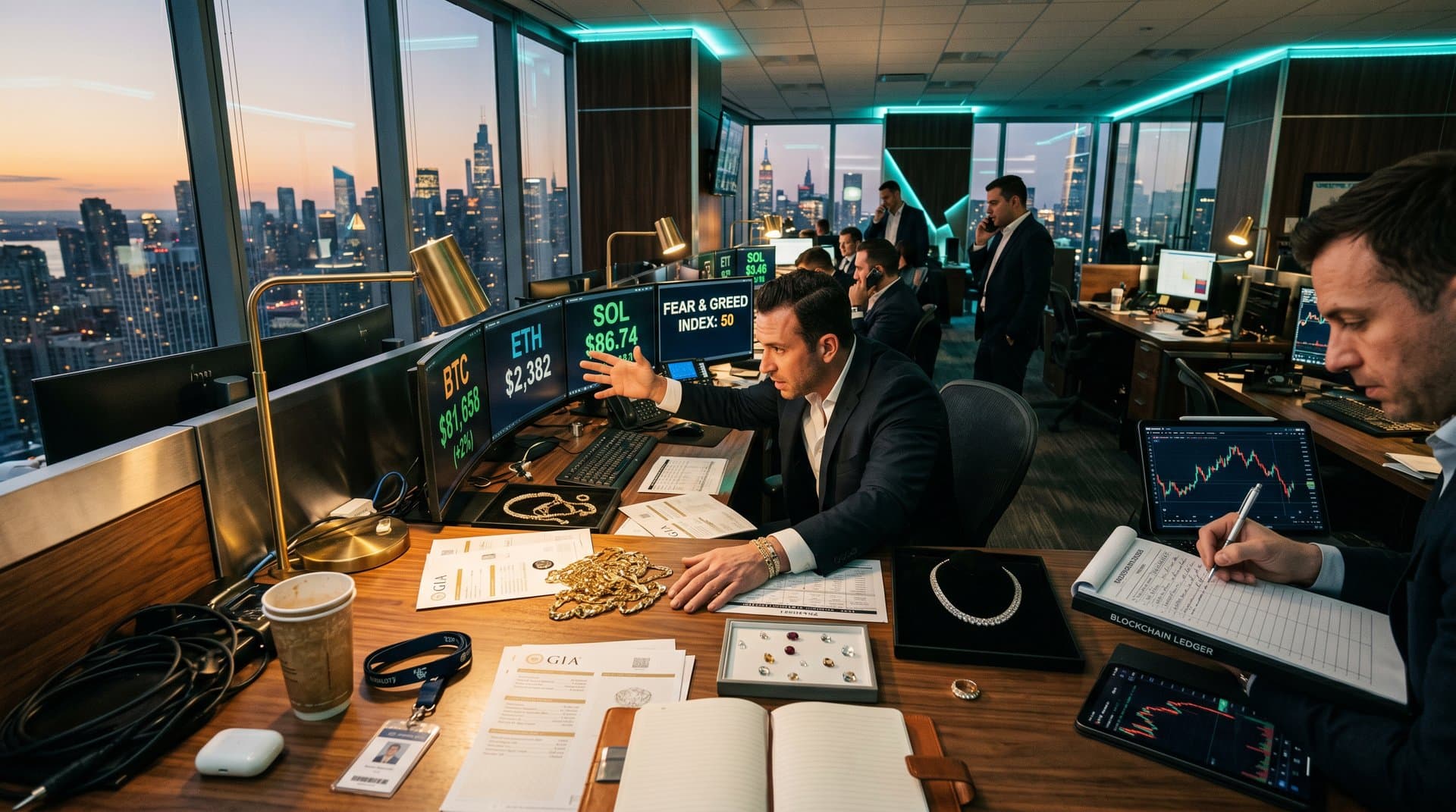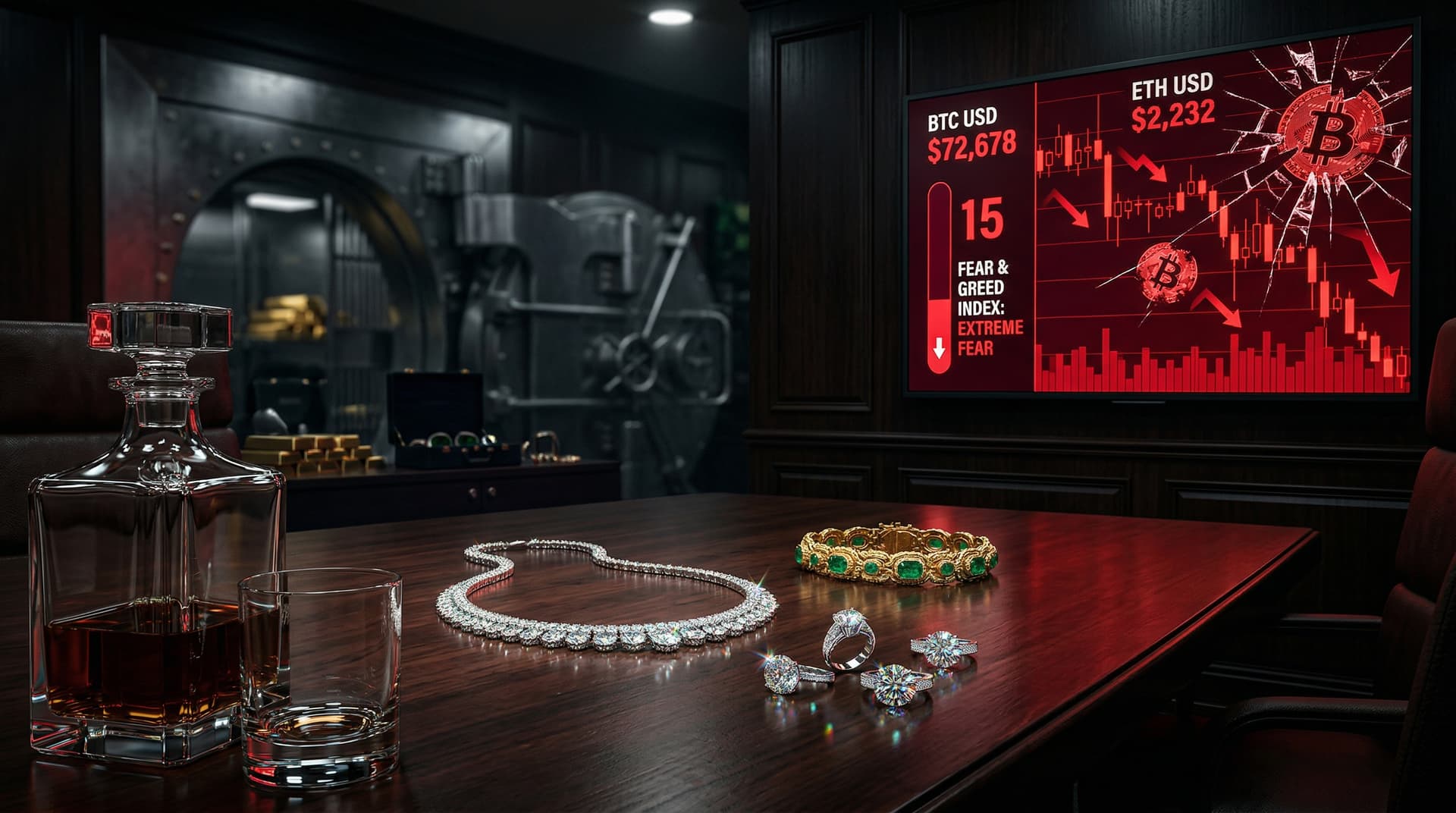
Crypto losses hit $22.5 billion USD for top 10 figures on April 11, 2026. MEL Magazine reports the event. The Fear & Greed Index reached 15, signaling extreme fear.
Bitcoin traded at $72,678 USD, up 0.8 percent. These losses expose volatility risks in luxury portfolios. High-net-worth investors pivot to stable jewelry assets.
April 11, 2026, Market Snapshot
Ethereum hit $2,232.18 USD, up 1.6 percent. USDT held steady at $1.00 USD. XRP stayed at $1.35 USD.
BNB climbed to $605.08 USD, up 0.6 percent. CoinMarketCap supplied these figures.
Bitcoin dropped 25 percent from March peaks. Coinglass data shows $1 billion USD in liquidations.
Institutions faced margin calls. LVMH tracks crypto exposure in client portfolios. Jewelry demand for physical assets rises.
Whales dumped 50,000 BTC since April 1. Arkham Intelligence reports the sales. Pressure mounted on prices.
Top 10 Crypto Losses
| Rank | Name | Estimated Loss (USD) | Primary Asset | Source |
|---|---|---|---|---|
| 1 | Michael Saylor | 4.4 billion | BTC | MicroStrategy Q1 2026 |
| 2 | Changpeng Zhao | 3.3 billion | BNB, BTC | Binance filings |
| 3 | Brian Armstrong | 3.0 billion | COIN stock | Coinbase Q1 2026 |
| 4 | Justin Sun | 2.2 billion | TRX, BTC | Tron network data |
| 5 | Vitalik Buterin | 2.1 billion | ETH | Etherscan wallet |
| 6 | Chris Larsen | 1.9 billion | XRP | Ripple disclosures |
| 7 | Brad Garlinghouse | 1.7 billion | XRP | SEC filings |
| 8 | Barry Silbert | 1.4 billion | GBTC | DCG balance sheet |
| 9 | Tim Draper | 1.3 billion | BTC | Draper Associates |
| 10 | Winklevoss Twins | 1.2 billion | BTC | Gemini reports |
MicroStrategy holds 252,000 BTC at $30,000 USD average cost basis. Q1 2026 earnings confirm this.
Saylor posted a $4.4 billion USD paper loss. Zhao's BNB stake fell 40 percent year-to-date.
Coinbase shares dropped 35 percent on low volume. Sun liquidated TRX after exploits.
Buterin's ETH suffered from layer-2 rivalry.
Jewelry Stability Amid Crypto Volatility
Crypto market cap fell to $2.1 trillion USD, down 18 percent from Q1. Bain & Company states this in its April 2026 luxury report.
Global jewelry reached $352 billion USD, up 4 percent.
LVMH's jewelry division grew 12 percent to 8.5 billion EUR in 2025 results. Richemont's Cartier and Van Cleef posted 9 percent organic growth. February 2026 update confirms.
Luxury groups avoid crypto treasuries. They stress RJC-certified mine-to-retail traceability.
Knight Frank's 2026 Wealth Report notes high-net-worth individuals average 5 percent crypto allocation. Losses spur shifts to physical gold and GIA-graded diamonds.
Luxury Industry Implications
LVMH limits blockchain to Bulgari high jewelry NFTs. Richemont funds lab-grown traceability tech.
Signet expands Everlon melee diamond lines amid crypto outflows.
Independent jewelers benefit. High-net-worth individuals favor pavé-set 18-karat white gold diamond necklaces.
Fairmined sustainable sourcing rises. SCS Global certified 20 percent more pieces in Q1 2026.
Crypto falters on unregulated exchanges. Jewelry offers bezel-set stability. Blockchain bolsters supply chain provenance.
Crypto Losers' Luxury Connections
Saylor owns $50 million USD in Patek Philippe watches. Christie's data confirms.
BTC overshadowed his tangibles pre-crash. Zhao funded Dubai property with BNB.
Armstrong piloted Tiffany & Co. crypto payments, paused per April 2026 memo.
Sun hosted Huobi diamond auctions during TRX rout. Winklevoss twins custodied Gemini luxury NFT jewelry.
Market fear stalls projects. Demand rises for prong-set eternity bands with VS1 round brilliants.
Jewelry Investor Outlook
High-net-worth clients boosted jewelry budgets 15 percent post-dips. Deloitte's 2026 Luxury Survey confirms.
18-karat gold chains sell at $5,000-$15,000 USD. Lab-grown diamonds hold 18 percent share, per GIA Q1 2026 data.
Vicenzaoro designers report 22 percent order growth. AR try-on apps drive ring sales. Jewelry margins endure.
Diversification Lessons from Crypto Losses
UBS Global Wealth 2026 recommends 20-30 percent in tangibles. Limit crypto to 5 percent.
Jewelry assets appreciate 8 percent annually. Art Market Research tracks this.
RFID tags secure 40 percent of high-end pieces. Jewelers of America reports. Jewelry stability prevails over crypto losses.