The Minnesota Senate passed the MN Crypto Kiosk Ban on April 11, 2026, prohibiting statewide crypto ATMs. The ban targets $125 million in 2025 scams per the Attorney General's office as fraudsters pivot to bridal jewelry counterfeits.
Crypto Kiosk Ban Details
Lawmakers blame kiosks for enabling romance scams and elder fraud. Victims send funds through these machines, which charge 10-20% fees for rapid laundering into untraceable crypto.
On April 11, 2026, Bitcoin traded at $72,818 USD, up 0.8% daily per CoinMarketCap. Ethereum hit $2,241.91 USD, up 1.0%. Alternative.me's Fear & Greed Index registered 15, signaling extreme fear.
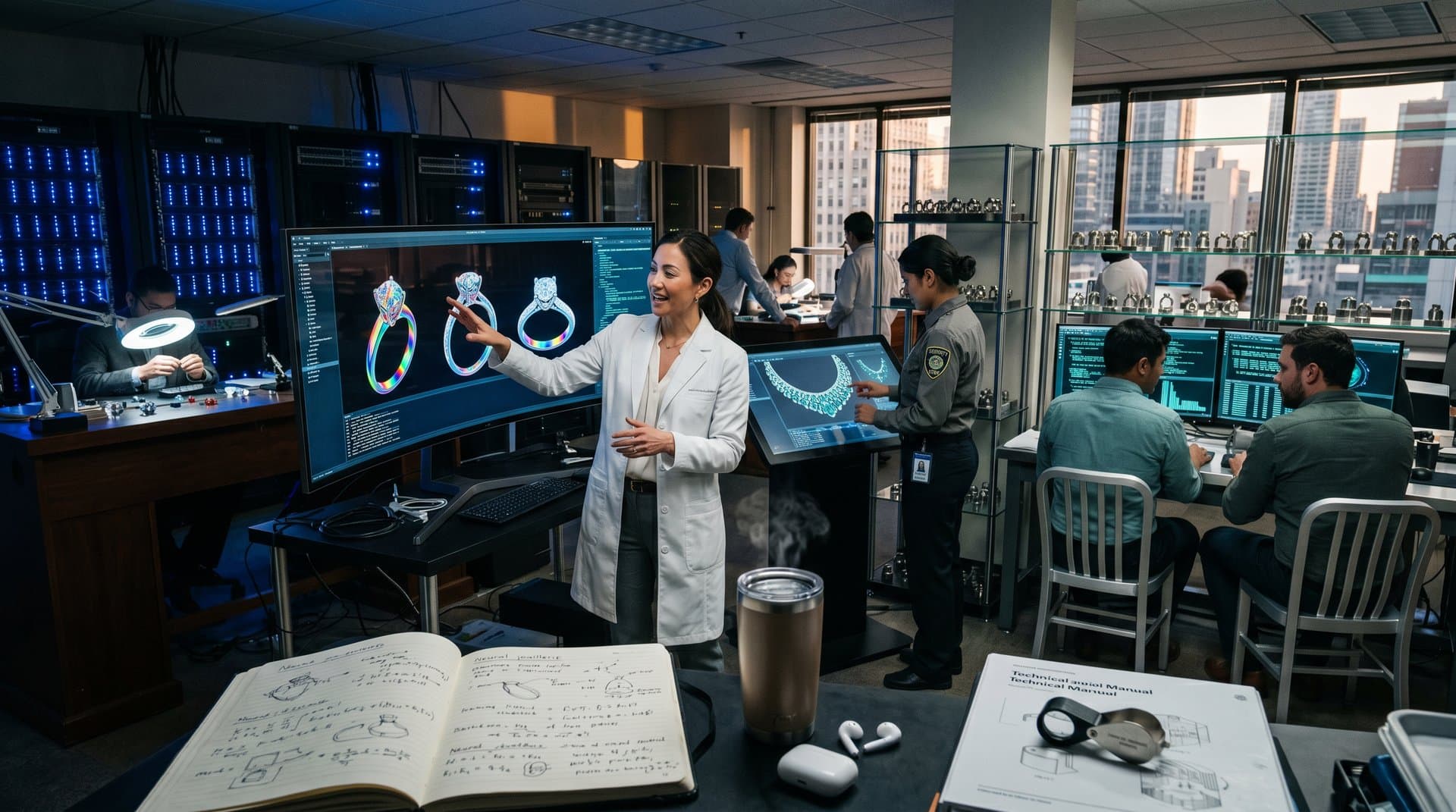
The ban severs scammers' quick cash pipelines during volatile crypto markets. Jewelers report fewer crypto-related inquiries but surging fake jewelry alerts.
Scammers Target Bridal Shoppers
Fraudsters peddle fake Cartier Love rings, 18-karat gold-plated brass with cubic zirconia pavé set in 2-carat total weight illusions. They mimic Van Cleef & Arpels Alhambra necklaces with synthetic spinel clovers on sterling silver chains.
Bridal season amplifies risks. Emotional buyers skip hallmark checks and opt for online deals at 70% discounts.
U.S. Customs and Border Protection seized $500 million in counterfeit luxury goods in fiscal 2025, per agency reports. The Minnesota Jewelers Association notes a 20% increase in suspicious bridal inquiries in Q1 2026.
Online platforms like Facebook Marketplace host 15% more fake listings since the ban, according to SellerMetrics data from April 2026.
Spotting Fake Diamonds in Bridal Rings
GIA standards rate excellent cuts for 95% light return with Hearts & Arrows symmetry. Fakes exhibit windowing, visible table facets, or milky dullness under 10x loupe.
D-color, Internally Flawless naturals command $18,000-$25,000 per carat per Rapaport April 2026. Moissanite mimics double refraction; thermal conductivity testers ($50 devices) distinguish them from diamond.
VS1 clarity diamonds average $5,000-$8,000 per carat. Lab-grown versions cost 40% less, backed by IGI certificates disclosing CVD or HPHT origin.
| Quality Tier | Natural Price/ct (USD) | Lab-Grown Price/ct (USD) | Resale Retention (Christie's 2025) |
|---|---|---|---|
| D/IF | 18,000-25,000 | 10,000-15,000 | 60% natural, 30% lab-grown |
| G/VS1 | 6,000-8,000 | 3,000-4,500 | 50% natural, 20% lab-grown |
| I/SI2 | 2,000-3,000 | 1,000-1,500 | 40% natural, 10% lab-grown |
Natural diamonds retain premiums due to rarity and mining provenance.
Gold Hallmarks and Metal Testing
Genuine 18-karat gold stamps "750" or "18K" inside shanks. Counterfeits plate 0.5-micron gold over brass, totaling under 5 grams for 2-carat settings.
Nitric acid kits ($20) etch fakes instantly. Handheld XRF analyzers ($20,000 units) measure purity to 0.1% accuracy on-site without damage.
Richemont's Cartier sources blockchain-traced, sustainable 18-karat gold. Pieces priced $5,000-$20,000 USD embed RFID for retail verification.
Blockchain Tech Shields Luxury Sales
Everledger has certified 1 million diamonds since 2020. Its blockchain ledgers, built on Ethereum, store GIA report hashes accessible via mobile apps.
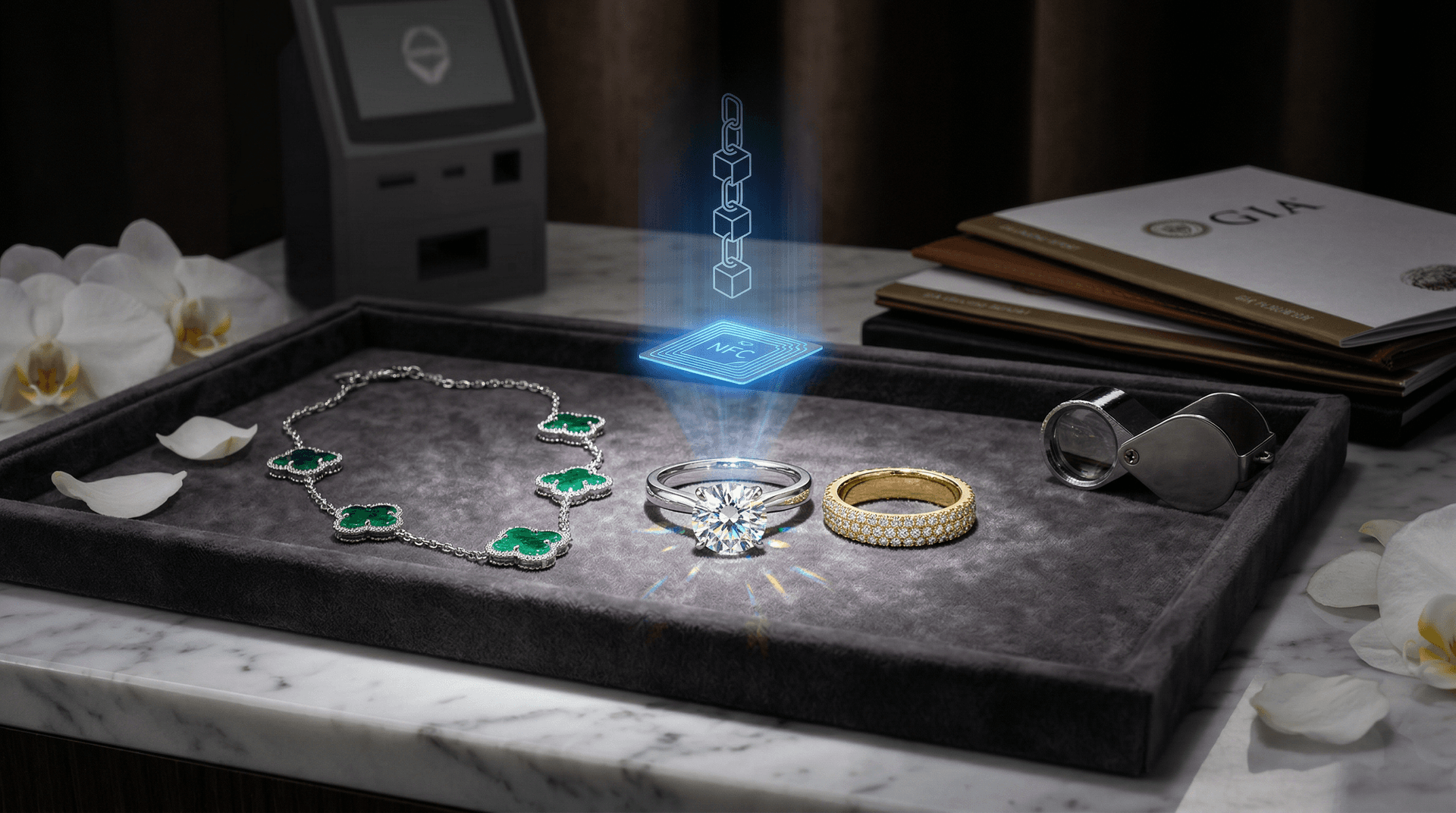
NFC chips in ring bezels link to full provenance histories. Signet Jewelers achieved 70% fraud reduction after rollout, per 2025 company filings.
Lab-grown 1.5-carat round brilliant solitaires retail at $4,000 per carat with full ethics disclosure. Worthy auction platform reports 25% premiums for blockchain-certified resale pieces in 2026 sales.
Lab-Grown vs Natural Diamonds
Lab-grown diamonds replicate natural carbon lattices via Chemical Vapor Deposition (CVD) or High Pressure High Temperature (HPHT). UV spectroscopy reveals nitrogen traces distinguishing origins.
A 2-carat E/VS2 lab-grown ring costs $8,000-$12,000 USD; natural equivalents fetch $25,000-$35,000 USD per Rapaport April 2026.
| Aspect | Natural | Lab-Grown |
|---|---|---|
| Origin | Mined | CVD/HPHT |
| Price | Premium | 30-50% less |
| Resale | Strong (Christie's) | Emerging |
| Scam Risk | High | Low if IGI certified |
| Environment | 500L water/carat | 10L water/carat |
Demand IGI or GIA reports for lab-grown bridal sets to confirm treatments.
Investment Outlook for Bridal Jewelry
Certified natural diamonds appreciate 5-8% annually, per Knight Frank Luxury Investment Index 2025. Blockchain verification boosts liquidity at auction.
Post-ban, Minnesota resale markets favor GIA-graded pieces. Harry Winston reports 15% inquiry spike for traceable bridal suites in April 2026.
Questions for Your Jeweler
1. Does it include GIA/AGS certificate for diamonds over 0.5 carats? 2. Can you perform on-site XRF metal testing? 3. Is blockchain or NFC traceability available? 4. Do you offer a one-year buyback guarantee? 5. Full disclosure on lab-grown versus natural?
Reputable sellers supply written confirmations.
Protect Bridal Investments Post MN Crypto Kiosk Ban
Graff and Harry Winston scan bridal inventories daily via GIA iGRS portals. They reject uncertified stones outright.
Blockchain technology merges finance tech with jewelry tradition. Verify pieces via apps this bridal season after the MN Crypto Kiosk Ban.