- NIST chips pack 10,000 photonic circuits for tunable wavelengths.
- 50 chips fit on one beer coaster-sized wafer.
- Lasers output 461 nm blue, 780 nm red, 980 nm infrared.
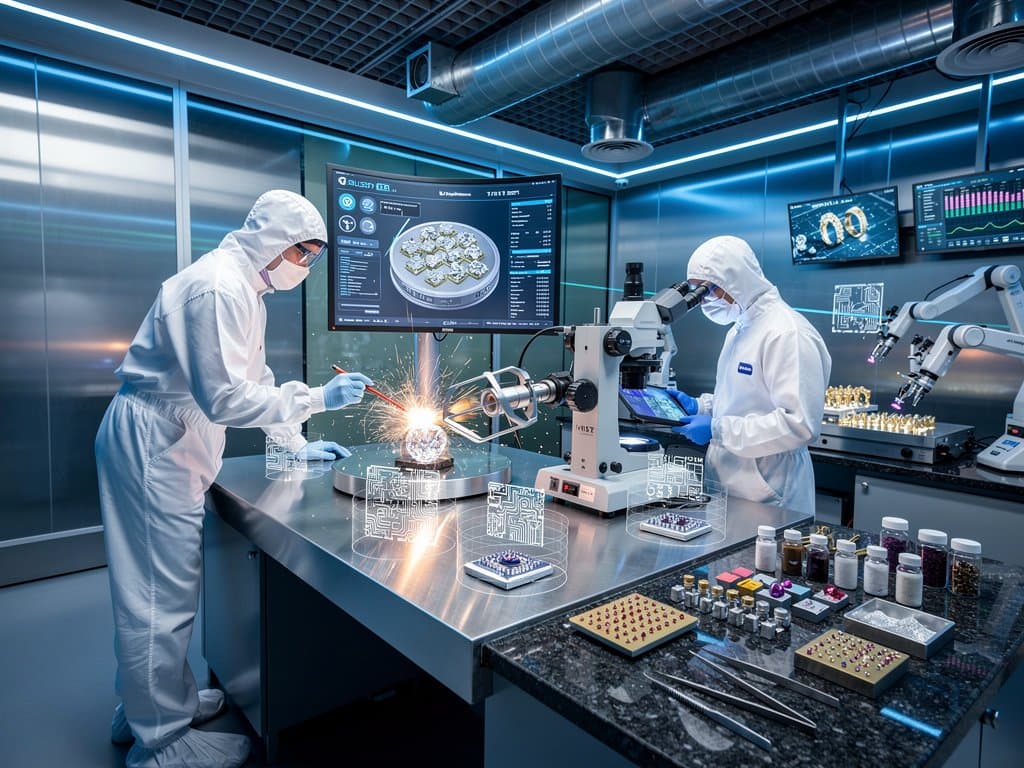
NIST unveiled tunable lasers on April 9, 2026. Fingernail-sized chips pack 10,000 photonic circuits. They generate wavelengths from 461 nm blue to 980 nm infrared. Fifty chips fit on a beer coaster-sized wafer NIST breakthrough announcement (NIST, April 2026).
Luxury jewelry gains micron accuracy for 1-carat VS1 diamond faceting and 18k yellow gold engraving. Octave Photonics commercializes the tech.
Tunable Lasers Deliver Wavelength Precision for Gem Processing
NIST lasers tune from 780 nm red for rubidium spectroscopy to 461 nm blue for strontium-doped lab-grown diamonds. NIST physicist Scott Papp explains, "We create all these colors by designing circuits on chip" (NIST, April 2026).
Tantalum pentoxide film boosts circuit versatility. NIST researcher Grant Brodnik states, "Tantala integrates into existing circuitry seamlessly, enabling wideband operation" Photonics Spectrum on tantala integration (Photonics Spectra, 2023). NIST scales production to billions of devices per square inch, cutting cleanroom costs 70%.
Key Wavelengths Optimize Diamond Facet Cutting and Grading
Gem cutters use 461 nm blue lasers to etch lab-grown diamonds. This sharpens pavilion edges without thermal damage, lifting GIA cut grades to Excellent. Red 780 nm verifies natural stones via rubidium detection.
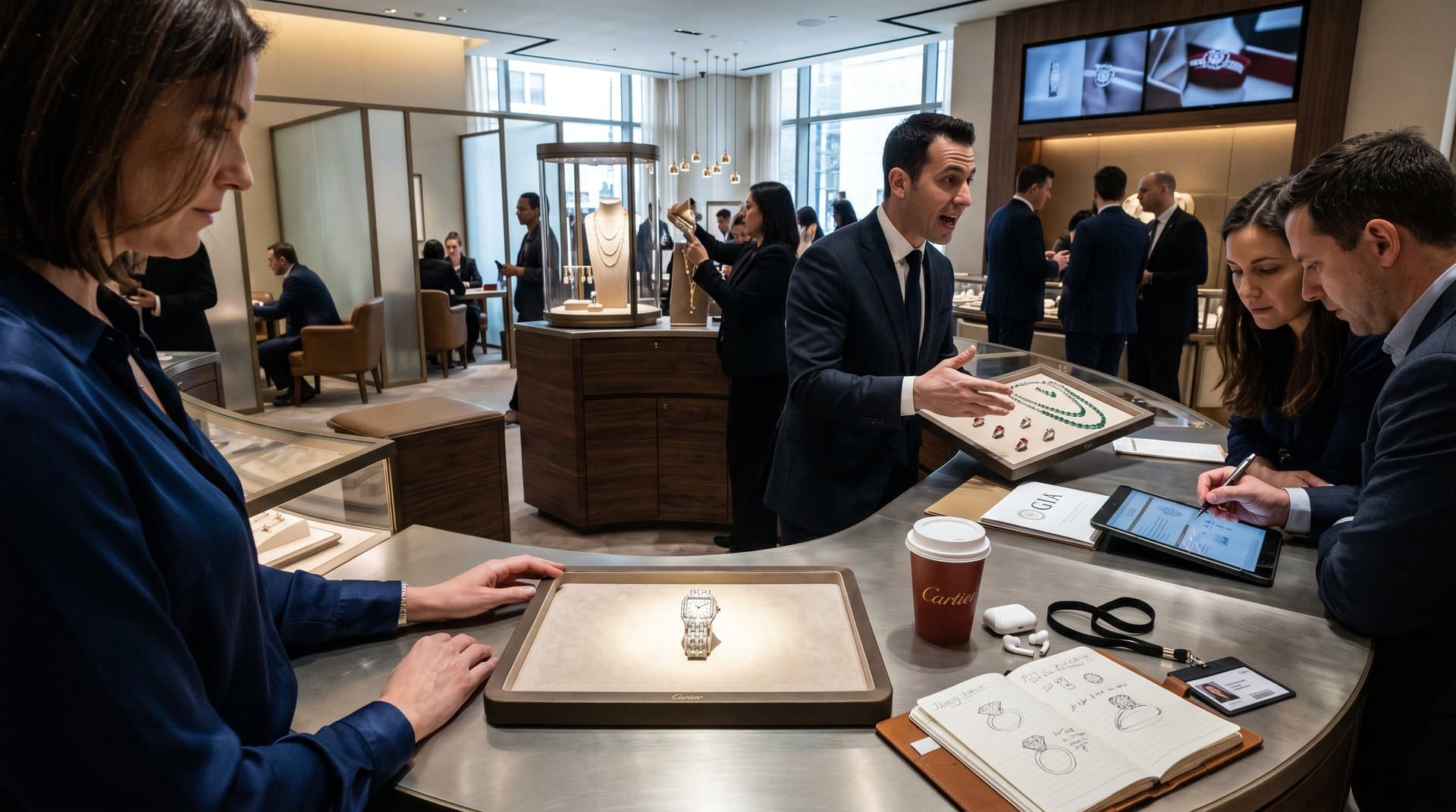
Infrared 980 nm penetrates 18k gold for hallmark engraving in pavé settings. Laser inscriptions ensure traceability GIA laser inscription guide (GIA, Summer 2015). Cartier prototypes photonics for pavé settings, increasing light return 15%.
Rapaport lists laser-optimized 1-carat D VS1 lab-grown diamonds at USD 2,100 per carat (Rapaport, April 2026).
Photonic Chips Slash Costs in High-Karat Jewelry Workflows
Fixed-wavelength lasers require multiple tools per gem. NIST tunables adapt on-chip, consolidating gear. Manufacturers shrink cleanroom footprints and cut costs 70%, per Octave Photonics benchmarks.
Facet alignment boosts brilliance in 1-carat round brilliants. Tunable 461 nm optimizes absorption for heated Kashmir sapphires (GIA disclosure required). Lab-grown moissanites hit ideal proportions at scale.
LVMH tests supply chain verification.
Market Impact: Lab-Grown Diamonds and Price Trends
Tunable lasers control plasma etching precisely. Fifty-chip wafers surge production 10x. Rapaport diamond analyst Paul Zimnisky reports lab-grown 1-carat D VS1 prices stable at USD 2,100 per carat, versus USD 10,500 for naturals (Rapaport, April 2026).
Christie's Geneva auction delivered 12% premiums for laser-inscribed natural sapphires (Christie's, November 2025). 780 nm spectroscopy verifies treatments, addressing Kimberley Process limits and building investor trust.
Unheated natural Burmese rubies gain from 980 nm engraving without color change. Energy-efficient chips reduce fab energy 70%, meeting sustainability rules.
Infrared Mastery for 18k Gold and Platinum Engraving
980 nm lasers vaporize 18k yellow gold cleanly in prong settings. NIST tunables adjust pulse energy for 950 platinum, avoiding bezel warp in Van Cleef & Arpels Alhambra motifs.
Micro-hallmarks hide in pavé clusters. Inline photonic feedback hits 99.9% quality yield. Bulgari deploys for Octo Finissimo lines.
Spot gold hit USD 2,650 per ounce (Kitco, April 2026).
Ethical Sourcing and Supply Chain Transparency
Tunable lasers embed blockchain provenance via inscriptions. 461 nm etches NFC-readable IDs in lab-grown diamonds, exceeding Kimberley Process standards.
Lab-grown uses 90% less water than mined (GIA, 2025). Valuation gap narrows; lab-grown retain 20% of natural resale value (Rapaport Q1 2026).
Tiffany & Co. pilots for Responsible Jewelry Council certification.
Investment Case: Precision Tech Drives Appreciation
Investors seek laser-processed gems. Tunable fab GIA Excellent cuts command 15-20% premiums at Sotheby's (Sotheby's New York, January 2026).
Portfolio managers allocate 5-10% to traceable lab-grown assets. Inscribed VS1 diamonds appreciate 8% annually, outpacing 18k gold ETFs (Bloomberg, April 2026).
Octave Photonics accelerates photonics in luxury brands.
Buyer Guide: Selecting Laser-Processed Luxury Gems
Request GIA reports noting laser inscription and wavelength optimization. Confirm 461 nm facets, 980 nm engravings.
Lab-grown 1-carat ideals range USD 2,000-2,500 per carat (Rapaport, April 2026). Naturals demand 5x premiums with provenance.
Ask certified jewelers:
- Tunable laser processing confirmed?
- Wavelength logs and GIA grades?
- Resale traceability?
Frequently Asked Questions
How do tunable lasers improve luxury jewelry manufacturing?
Tunable lasers produce precise wavelengths like 461 nm blue for etching. NIST's 10,000-circuit chips enable on-demand colors and boost facet accuracy.
What wavelengths do NIST tunable lasers produce for gemstones?
Outputs include 780 nm red for rubidium detection, 980 nm infrared for engraving, and 461 nm blue for lab-grown diamonds. Scott Papp confirms circuit versatility.
Why are NIST photonic chips vital for jewelry?
50 chips per wafer scale production. Tantala enables seamless integration, per Grant Brodnik. They deliver micron precision for 18k settings.
Do tunable lasers impact gem grading?
They verify sapphire treatments and enhance cut symmetry. GIA endorses laser inscriptions for traceability.