- 1. AI-designed custom jewelry sets range $2,000-$20,000 with neural network precision.
- 2. Lab-grown 1ct VS2 diamonds: $1,200 vs. $5,200 natural (Rapaport Oct 2024).
- 3. Texas CS embeds AI, grads innovate luxury rings via GANs and ray-tracing.
Texas universities pivot computer science curricula to artificial intelligence amid declining entry-level coding jobs. This shift powers AI-designed custom jewelry sets for luxury rings priced from $2,000 to $20,000.
The San Antonio Report highlights UT Austin and UT San Antonio's leadership in machine learning integration (October 2024). San Antonio Report.
Texas CS Programs Embed AI for Jewelry Innovation
Entry-level software developer jobs in Texas dropped 15% year-over-year, per U.S. Bureau of Labor Statistics data (September 2024). Universities weave AI into core CS courses.
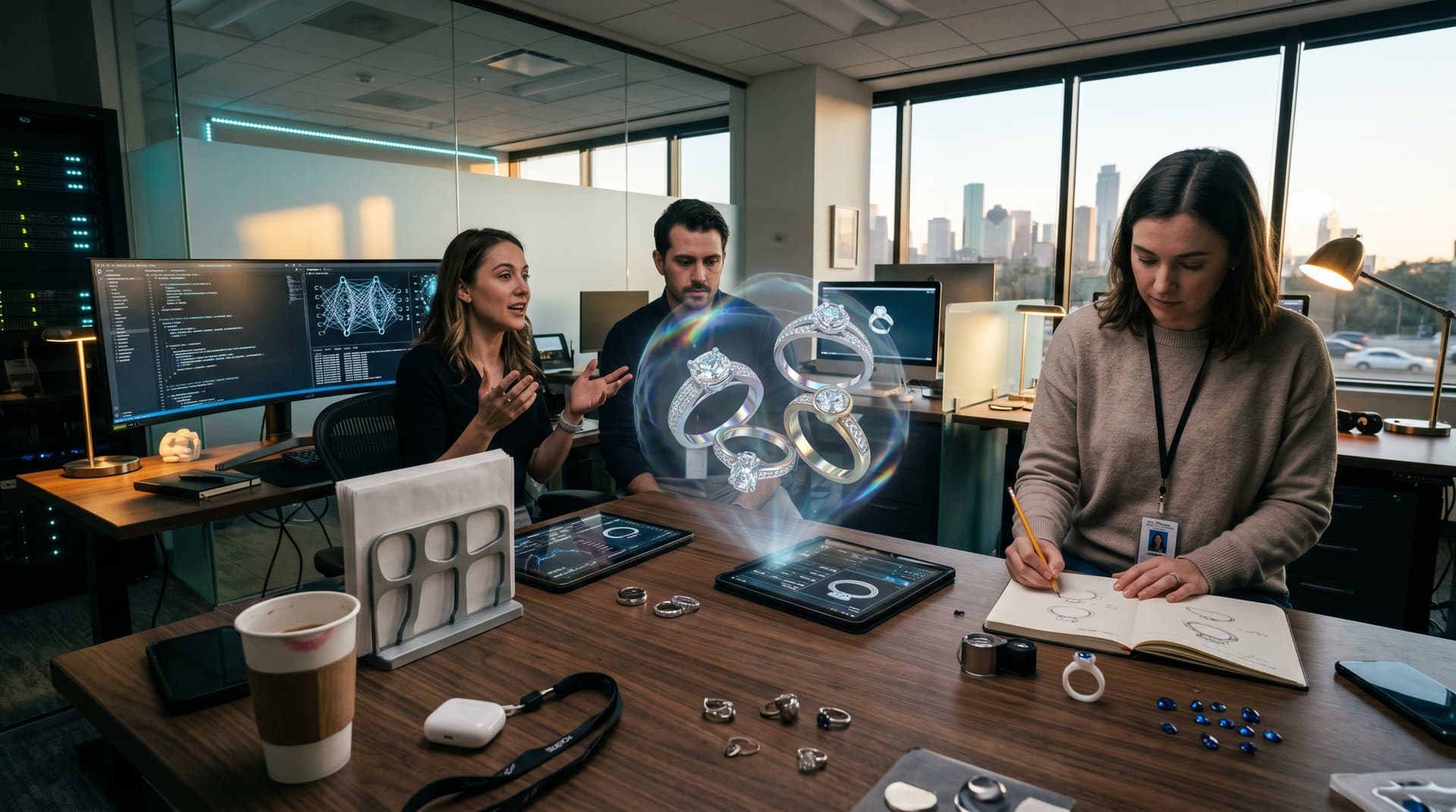
UT Austin's Cockrell School of Engineering offers AI electives. Students apply neural networks to simulate diamond light refraction in D-F color, VS1-VS2 clarity stones. Rice University's CS department trains graduates on generative adversarial networks (GANs) for 3D ring prototypes.
Luxury brands like Bulgari integrate these tools for tension-set moissanite rings via chemical vapor deposition (CVD) lab-growth. Texas graduates prioritize AI-driven ethics and optimize prong settings in 14k yellow gold for 1-carat center stones.
How AI Generates Precise Custom Ring Designs
Generative AI algorithms produce 10,000 ring variants per minute. Inputs include 1.5-carat oval sapphires (heat-treated, Sri Lankan origin) paired with 950 platinum shanks.
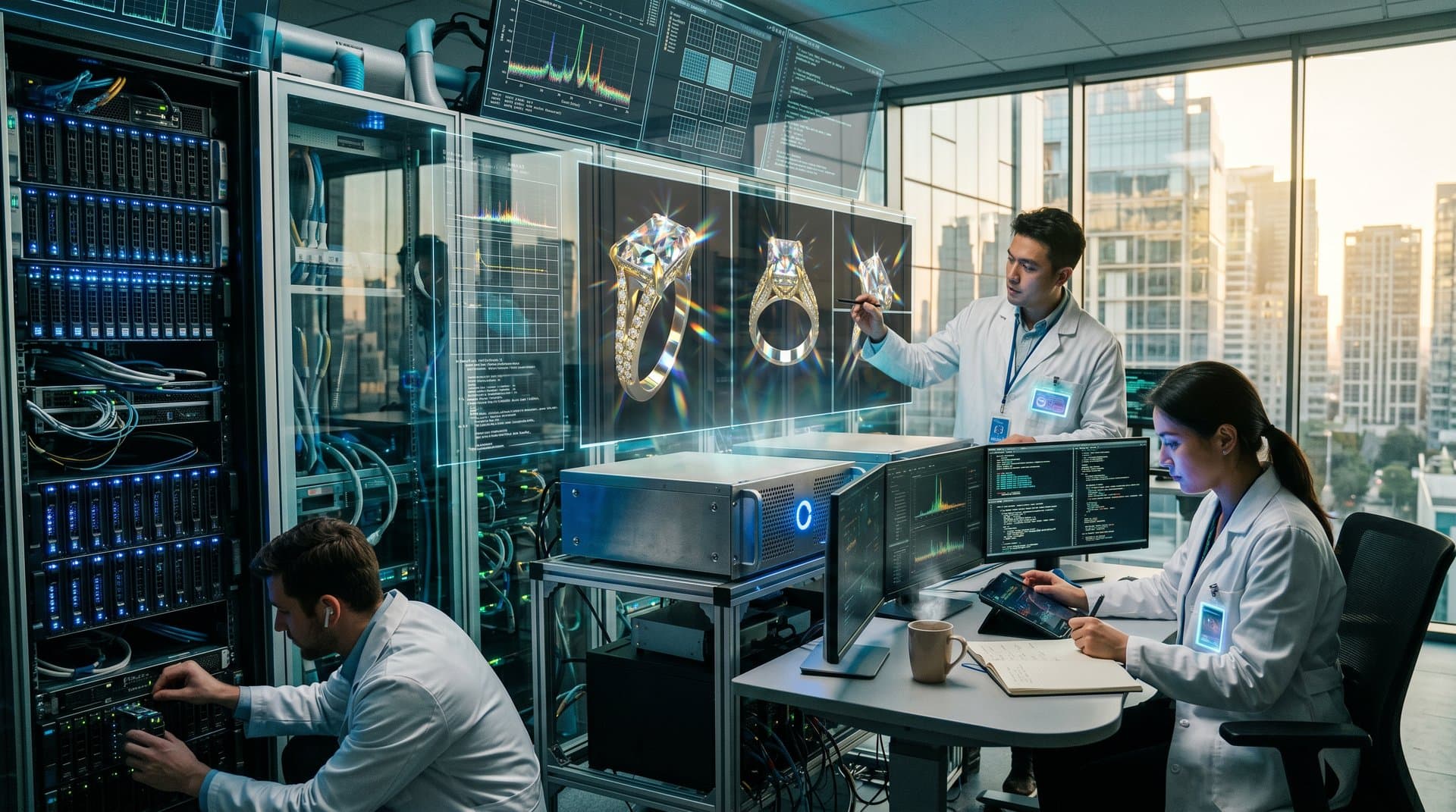
Van Cleef & Arpels pilots AI for Alhambra clover motifs using pavé VS2 lab-grown diamonds. Texas engineers boost scalability with ray-tracing simulations to predict sparkle factor.
Clients submit hand scans via apps. AI recommends bezel-set emeralds (oil-filled, Colombian origin). Design cycles shrink from four weeks to four hours, per UT Austin case studies (2024).
Lab-Grown vs. Natural Gems: AI Grading Insights
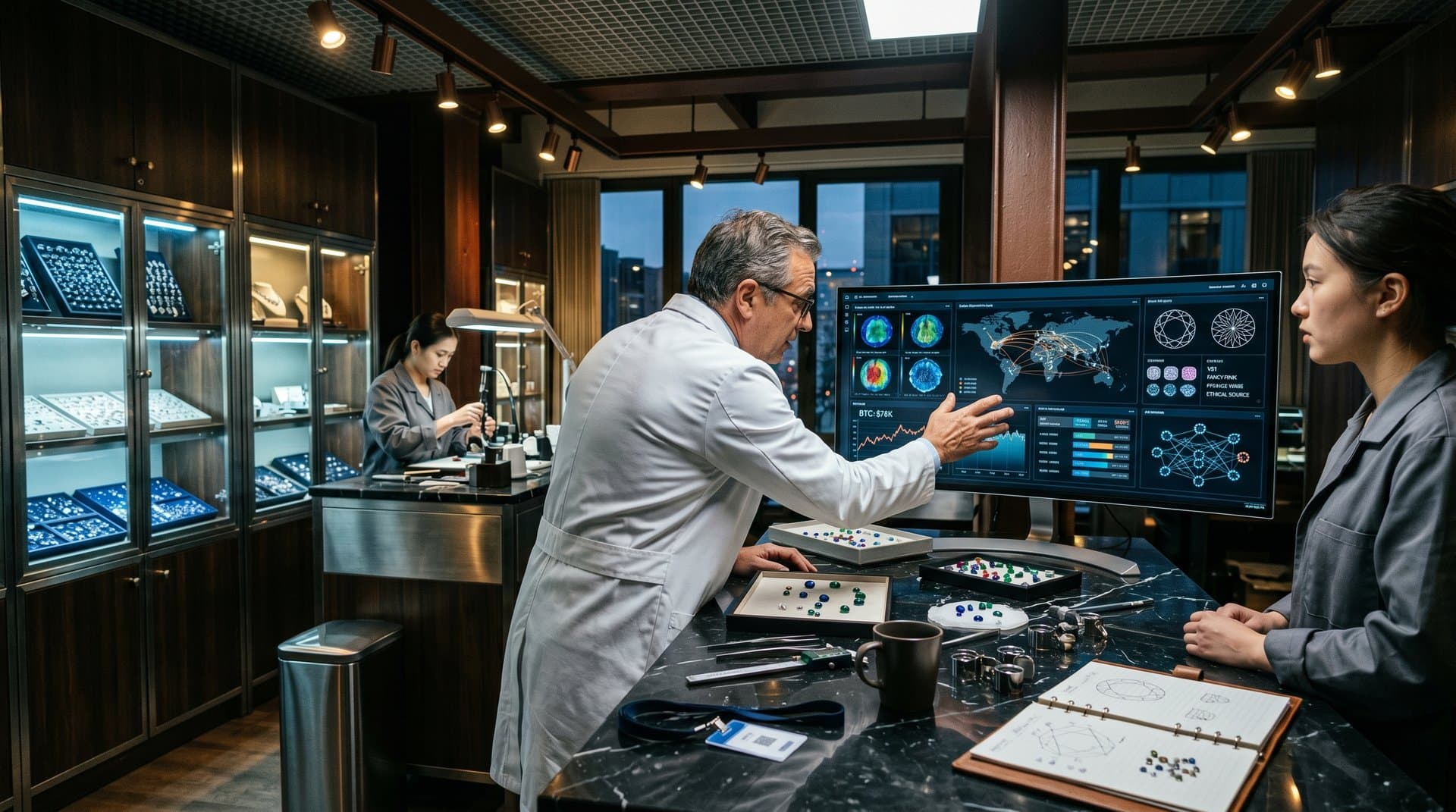
AI-powered spectroscopy identifies inclusions in natural versus CVD/HPHT lab-grown stones. The Gemological Institute of America (GIA) details these applications in its Fall 2023 Gems & Gemology article. GIA on AI in gemology.
- Feature: Formation Process · Natural Diamonds (1ct VS2): Mined, geological pressures · Lab-Grown Diamonds (1ct VS2): CVD/HPHT lab, 4-6 weeks
- Feature: Price (Rapaport, Oct 2024) · Natural Diamonds (1ct VS2): $5,200 USD · Lab-Grown Diamonds (1ct VS2): $1,200 USD
- Feature: Fluorescence Patterns · Natural Diamonds (1ct VS2): Unique birefringence · Lab-Grown Diamonds (1ct VS2): Engineered to match natural
- Feature: Resale Value (Sotheby's 2024) · Natural Diamonds (1ct VS2): +25% premium over retail · Lab-Grown Diamonds (1ct VS2): +10% annual growth
- Feature: AI Identification · Natural Diamonds (1ct VS2): Nitrogen-vacancy aggregates · Lab-Grown Diamonds (1ct VS2): Growth layer patterns
Unheated Kashmir sapphires (cornflower blue, 0.6ct) pair with AI-optimized settings. Lab-grown Sri Lankan equivalents cost 80% less and boost accessibility.
Financial Impacts: Pricing and Market Trends
Global custom jewelry market hit $42 billion in 2024, per Statista (Q3 2024). AI-designed custom jewelry sets claim 12% share through cost efficiencies.
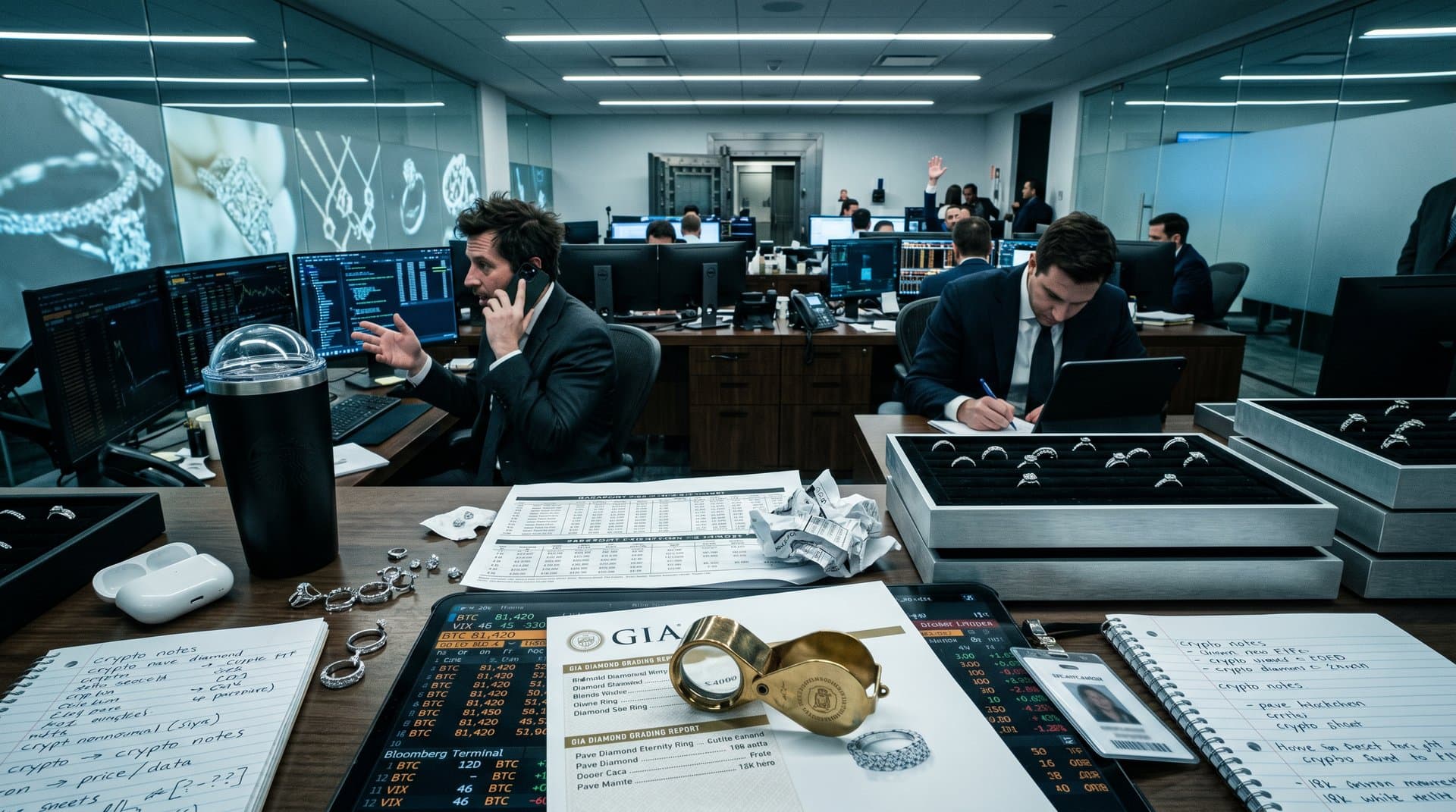
Rapaport pricing (Oct 2024) shows lab-grown diamonds holding $1,200 per carat for VS2, depreciating 50% slower than 2023. Natural stones command $5,200, with 18k white gold settings adding $800-$1,500.
Auction data highlights investment potential. Christie's Geneva sold a 2-carat AI-optimized natural diamond pavé ring for $18,500 (November 2024), 22% above estimates. Sotheby's New York saw lab-grown counterparts appreciate 15% year-over-year (October 2024).
Ethical Sourcing and Supply Chain Tech
AI-designed custom jewelry sets integrate blockchain for provenance. Everledger tracks Kimberley Process certifications and notes limits for non-diamond gems.
Texas open-source models cut material waste 30%, per Rice University pilots (2024). Cartier uses similar tech for high jewelry, ensuring conflict-free 950 palladium shanks.
Hyper-personalized rings leverage 3D body scans for fit. Prices span $2,000 lab moissanite sets to $20,000 2-carat natural diamond halos.
UT Austin CS Program lists 12 AI-focused courses driving adoption.
Buyer Guide: Evaluating AI-Designed Rings
Verify GIA or IGI grading reports for clarity, cut, treatments.
Request AI-generated stress simulations for 18k gold prongs under 10N force.
Benchmark against Rapaport sheets for purchase month.
Demand resin-printed physical prototypes for fit tests.
Texas AI pivot delivers ethical, precise luxury rings. It blends advanced tech with timeless jewelry tradition, reshaping the market for AI-designed custom jewelry sets up to $20,000.
Frequently Asked Questions
How does Texas CS AI pivot impact AI-designed custom jewelry sets?
UT Austin grads use generative AI for pavé rings in 18k gold. Cuts design time 75%, enables $2,000 entry-level luxury.
What defines AI-designed custom jewelry sets for rings?
Neural networks optimize 1-ct VS2 diamonds or sapphires in bespoke shanks. Simulates light and stress for $2,000-$20,000 pieces.
How does AI differentiate natural and lab-grown gems?
Spectroscopy detects CVD patterns vs. natural nitrogen. Lab-grown: $1,200/ct; natural: $5,200/ct (Rapaport Oct 2024).
What to verify when buying AI-designed custom jewelry sets?
GIA reports, prong sims, Rapaport pricing. Test physical prototypes for balance.