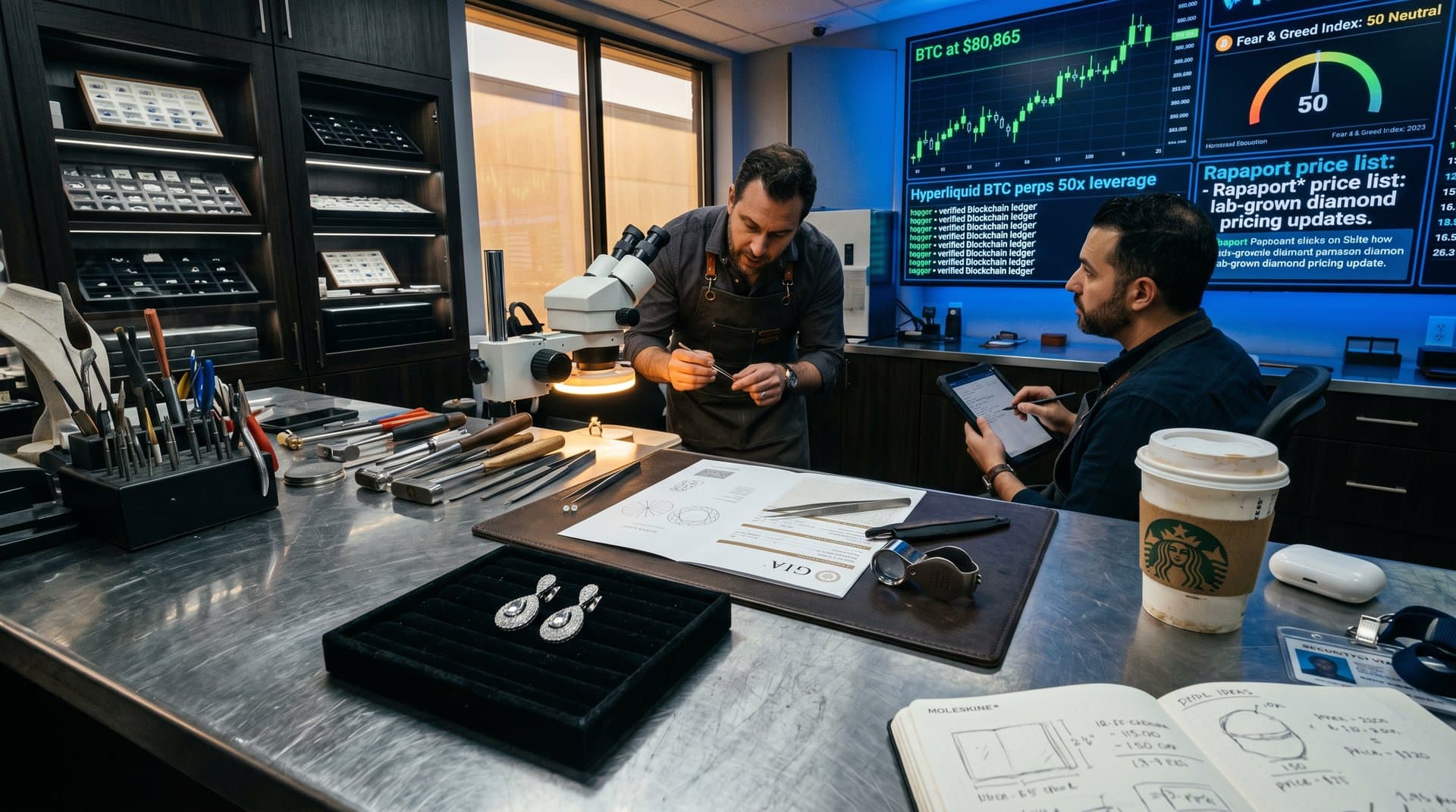
- 1. States resist Trump AI regulation jewelry preemption, reports The Next Web (Oct 2024).
- 2. BTC drops 0.5% to $75,768; Fear & Greed at 27 signals investor caution.
- 3. AI delivers 95% gem accuracy per GIA, enhancing $1,500-$5,000 earring values.
Trump AI regulation jewelry tools encounter state and congressional resistance to federal preemption, according to The Next Web (October 15, 2024). This policy clash disrupts AI customization for luxury earrings and advanced gem grading. Bitcoin declined 0.5% to $75,768 on October 10, 2024, per CoinGecko data, while the Crypto Fear & Greed Index hit 27, indicating extreme fear.
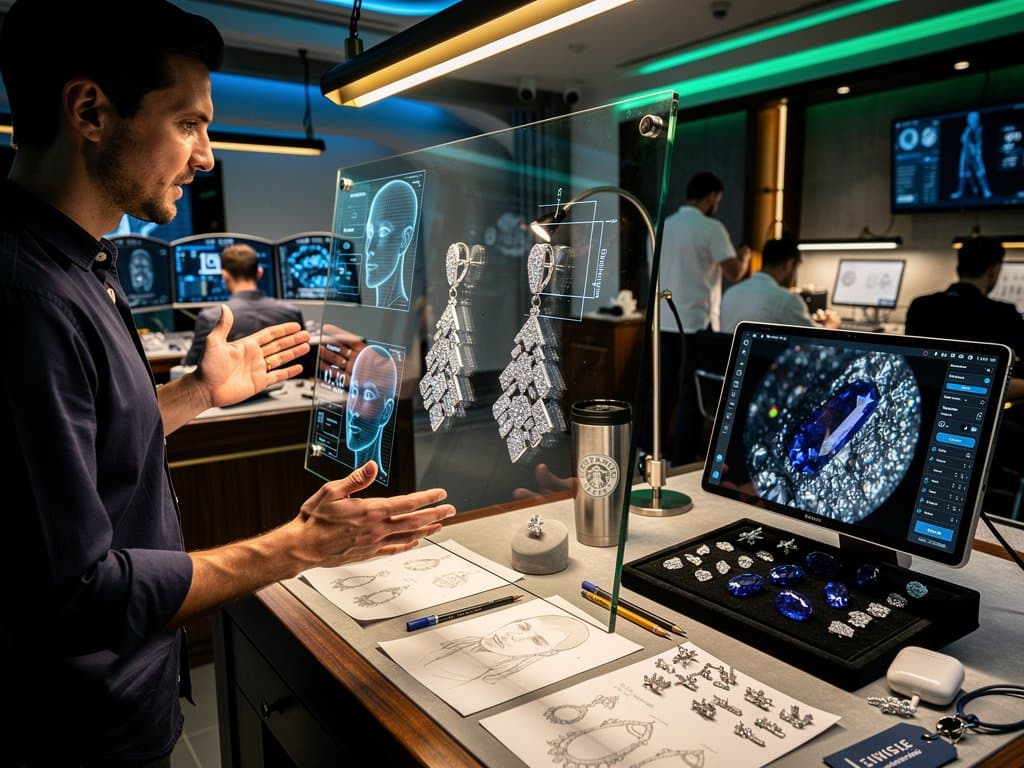
AI personalization revolutionizes luxury earrings priced $1,500-$5,000, featuring lab-grown diamonds (GIA Type IIa, fully disclosed per FTC guidelines). Customers upload selfies; algorithms adjust drop lengths, prong settings, and pavé layouts to match face shapes and necklines.
Trump AI Regulation Jewelry Disrupts Earring Customization
Cartier deploys AI to design pavé diamond chandelier earrings (1.5 ct total weight, VS1 clarity, G-color, untreated) in seconds, optimizing for round or oval faces. Van Cleef & Arpels tests AI for Alhambra clover motifs, reducing production time from weeks to hours, per company announcements (September 2024).
Lab-grown diamonds slash costs 70% compared to natural stones, based on Rapaport Diamond Index data (October 10, 2024). Federal preemption promises uniform protocols, but California enforces AI transparency rules for algorithms. These rules impact 18k white gold chandelier settings with 0.25 ct melee diamonds.
Texas advances AI data center energy regulations, endorsing cooperative federalism, as noted by Congress members (Politico, October 2024). XRP traded at $1.43, down 0.4% on October 10 (CoinGecko), bolstering NFT provenance for bespoke earring designs.
AI Enhances Gem Authenticity for Earrings
AI systems scan earring gems for inclusions, fluorescence, and symmetry, outperforming manual checks. GIA Gems & Gemology (Fall 2023) documents 95% accuracy in detecting sapphire color variances and treatments.
Natural Kashmir sapphires (heated, unenhanced per GIA standards) fetch $10,000 per carat. Lab-grown sapphires replicate spectra but retail 30-40% lower, per GrownDiamondIndex (October 2024). National standards could enhance resale confidence in 950 platinum prong settings for drop earrings.
- Aspect: Price per Carat (USD) · Natural Sapphire Earrings (18k Gold): $2,000-$15,000 (Rapaport, Oct 10, 2024) · Lab-Grown Sapphire Earrings (18k Gold): $500-$3,000 (GrownDiamondIndex, Oct 2024)
- Aspect: AI Detection Accuracy · Natural Sapphire Earrings (18k Gold): Unique inclusions, natural fluorescence (95%) · Lab-Grown Sapphire Earrings (18k Gold): Synthetic spectra match but flagged (95%)
- Aspect: Resale Value Retention · Natural Sapphire Earrings (18k Gold): 80% with GIA certificate · Lab-Grown Sapphire Earrings (18k Gold): 60%, improves to 75% with blockchain certs
Ethereum dropped 1.4% to $2,328.81 amid regulatory uncertainty (CoinGecko, October 10, 2024).
State Laws Challenge Trump AI Regulation Jewelry Adoption
California requires AI bias audits for jewelry design software. New York mandates vendor transparency reports. Preemption simplifies scaling for national jewelers but hampers local open-source tools for independent designers, per Jewelers of America (Q3 2024 report).
Emerging artisans use AI to craft chandelier drops with sustainable Colombian emeralds (VVS clarity, minor oil treatment disclosed). AI sourcing maps cut supply chain risks by 25%, according to Ethical Facets study (September 2024).
Market Impacts: Pricing and Investment in Regulated AI Jewelry
Investors eye GIA reports paired with AI scans for earrings. A 1 ct lab-grown diamond stud pair (D-VS1, untreated) retails $2,000-$4,000; natural equivalents exceed $10,000 at Christie's New York (October 8, 2024 auction). AI detects 10-20% value loss in pavé settings from strong fluorescence in D-color diamonds.
Blockchain platforms like Everledger track provenance, lifting lab-grown resale by 15% (Deloitte Luxury Report, 2024). Trump preemption could standardize labels by 2027, per Policy Insights (October 2024), enhancing liquidity.
Key questions for buyers:
- Does the AI tool comply with GIA grading protocols?
- Can sellers supply natural vs. lab-grown spectral comparisons?
- How might state rules delay certification?
State lawsuits diversify standards, tying Trump AI regulation jewelry to broader tech-finance volatility. BTC's dip highlights risks, but AI boosts long-term earring asset values amid ethical sourcing demands.
Frequently Asked Questions
How does Trump AI regulation jewelry affect earrings?
Federal preemption standardizes AI design and grading but meets state resistance. GIA reports 95% sapphire accuracy (Gems & Gemology, Fall 2023).
What is AI personalization for luxury earrings?
AI uses selfies to customize drops and styles. Cartier and Van Cleef reduce design time; lab-grown diamonds make $1,500-$5,000 pieces accessible.
How accurate is AI for earring gem authenticity?
95% accuracy on inclusions per GIA. Natural sapphires hit $10,000/ct; lab-grown 30-40% less, with blockchain boosting resale.
Why resist Trump AI regulation jewelry preemption?
States prioritize bias audits and innovation. Uniform rules raise costs for independents; BTC at $75,768 shows market caution.