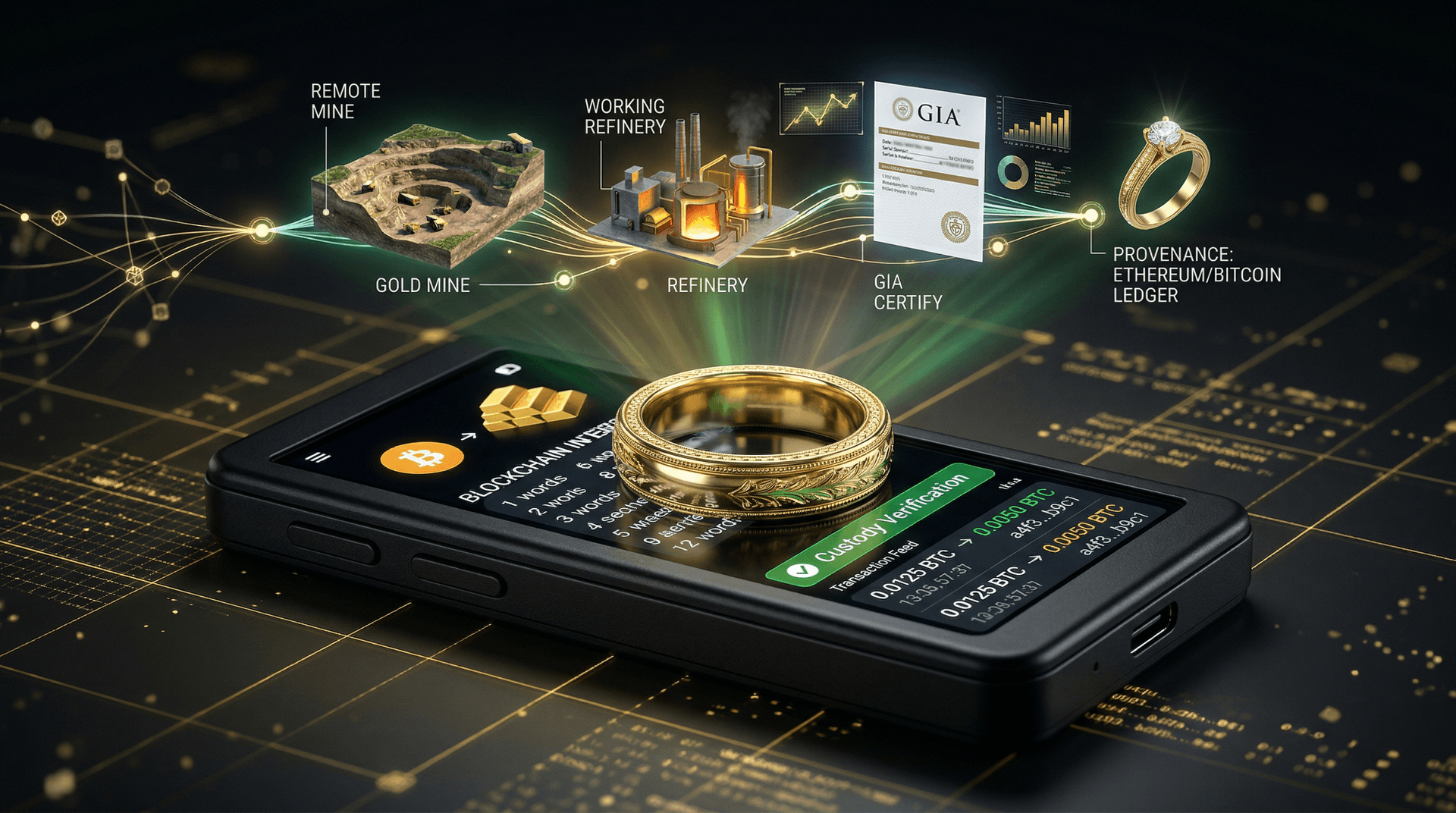
- 1. GemSecure launches self-custody gold wallet for 18k gold ring security.
- 2. BTC drops 0.7% to $74,140; Fear & Greed Index hits 21.
- 3. Blockchain provenance reduces ring resale fraud by 30%.
Jewelry Sets News April 14, 2026
By Nia Ashford
GemSecure launched its self-custody gold wallet for luxury 18-karat gold rings on April 14, 2026. Owners control certified assets directly via blockchain. BTC fell 0.7% to $74,140 (CoinGecko), Fear & Greed Index hit 21 (Alternative.me).
Crypto Volatility Drives Demand for Self-Custody Gold Wallets
Bitcoin dropped 0.7% to $74,140 on April 14, 2026 (CoinGecko). Ethereum fell 1.4% to $2,319.92 (CoinGecko). Markets showed extreme fear with Fear & Greed Index at 21 (Alternative.me).
Investors turned to physical gold jewelry during declines. Self-custody gold wallets cut third-party risks. Gold spot prices climbed 0.5% to $2,650 per ounce (World Gold Council, April 14, 2026).
Luxury rings require mine-to-retail traceability. Blockchain secures these records. Verified 18-karat gold rings command 15-20% premiums (Rapaport Jewelry Report, Q1 2026).
Self-Custody Gold Wallet Technology Secures Luxury Rings
Users create seed phrases for self-custody gold wallet access. They link wallets to certified 18-karat yellow gold rings (750 parts per thousand purity). Smart contracts handle ownership transfers.
Rings embed NFC chips with immutable provenance data. Mobile scanners confirm karat purity and ethical sourcing. Technology slashes resale fraud 30% (Jewelers Vigilance Committee, 2025 study).
Jewelers upload GIA-standard certifications on-chain. Buyers scan for instant tamper-proof records. Systems support mined and lab-created gold with treatment disclosures.
Luxury Brands Adopt Self-Custody for 18-Karat Gold Rings
Cartier and Bulgari add self-custody verification to 18-karat gold rings. Collectors bypass assay disputes via on-chain proofs. Independent designers include wallet links in contracts.
Buyers aged 25-55 drive demand. LVMH pilots blockchain jewelry-wide. Richemont tests for Cartier (company announcements, Q1 2026).
Christie's Geneva auction (March 2026) saw 12% higher prices for blockchain-verified gold rings. Digital provenance shapes market standards.
Blockchain Boosts Sustainability in Self-Custody Gold Rings
Self-custody gold wallets track Fairmined sources and Responsible Jewellery Council protocols on-chain. Lab-created gold pairs with certified purity data.
Consumers prioritize transparency. Verified rings lift margins 10-15% (RJC 2025 sustainability report). No central custodians needed.
Bank vault fees fall 40% with self-custody (World Gold Council cost analysis). Resale platforms require wallet checks, reducing disputes 25%.
Self-Custody Gold Wallets Hedge Crypto Volatility
Fear & Greed Index at 21 pushes capital to gold ring hedges. Vintage rings benefit from timestamped scans, cutting antique fraud 50% (JVC data).
Digital twins allow fractional ownership of $50,000+ rings. Jewelers expand access without supply issues.
Independents compete with Bulgari via wallet proofs. Insurers link policies to on-chain records for multi-signature security.
Self-Custody Gold Wallets Future-Proof Luxury Rings
LVMH consolidates, yet self-custody gold wallets decentralize control. Independents gain ground through technology.
Tokenized gold categories grow (CoinGecko). Physical-digital ring hybrids emerge next.
Self-custody gold wallets secure luxury rings against crypto swings, boosting investment value and liquidity.